

What if the future of the office does not begin with a new piece of furniture or a new room, but with the question of what is already there?
What if the future of the office does not begin with a new piece of furniture or a new room, but with the question of what is already there?
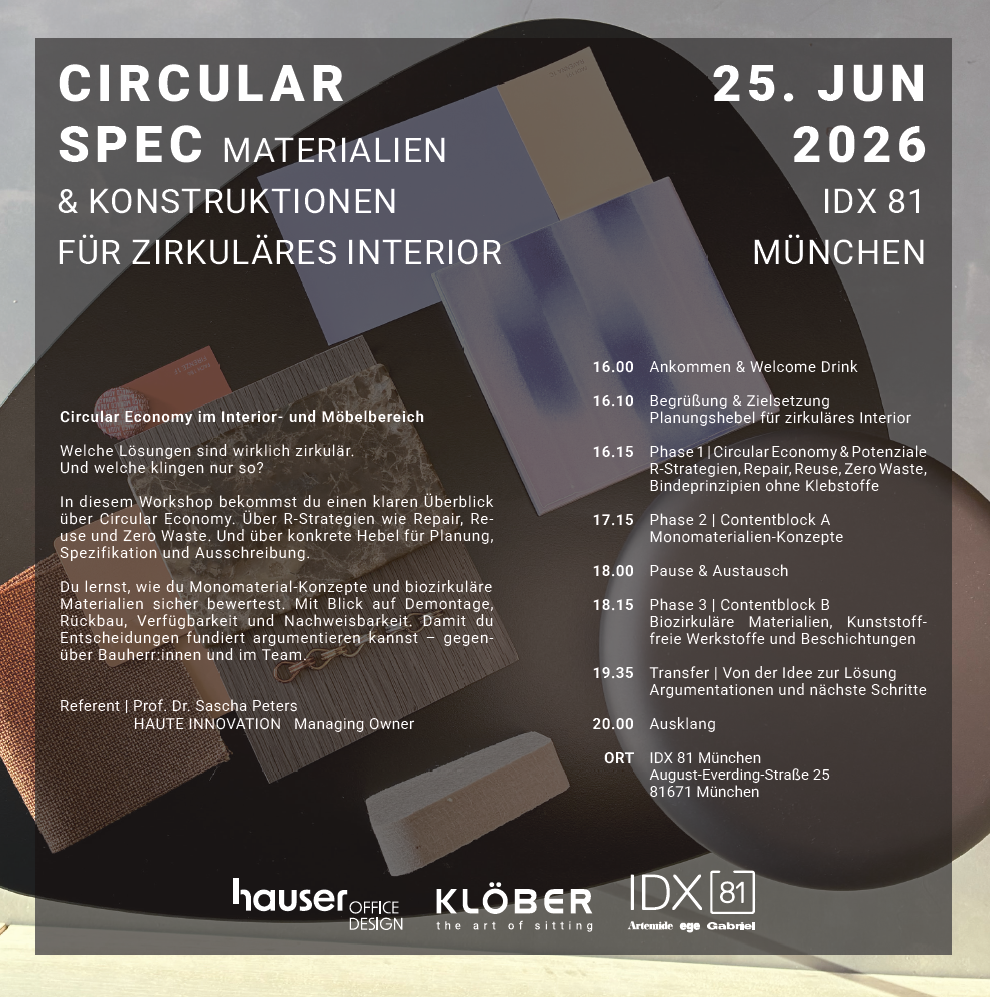
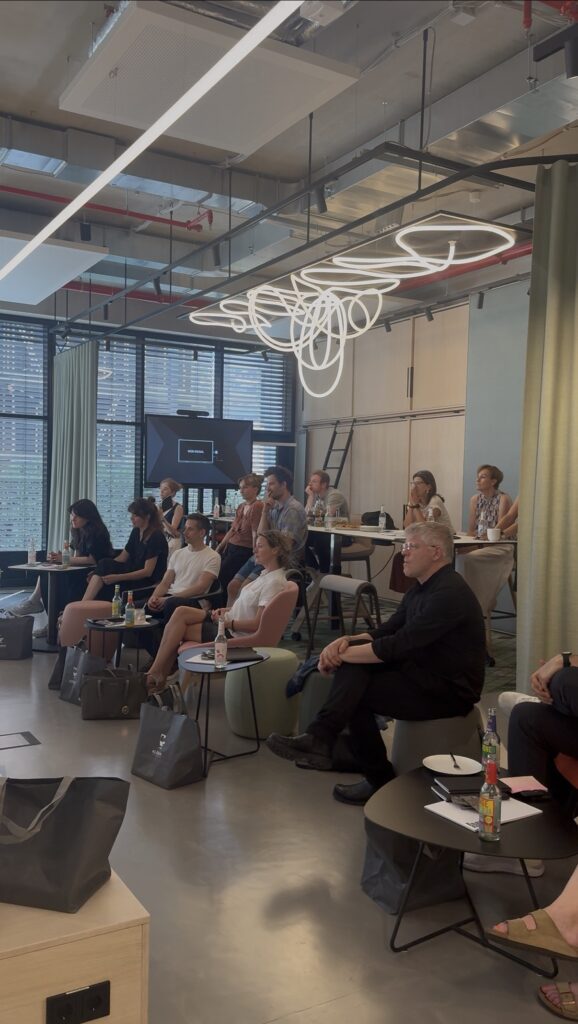
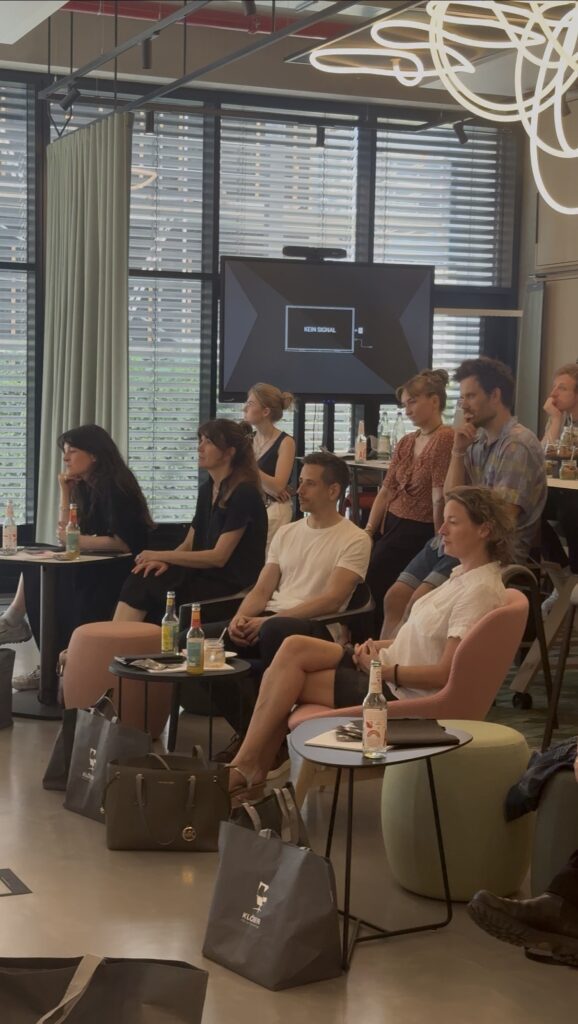
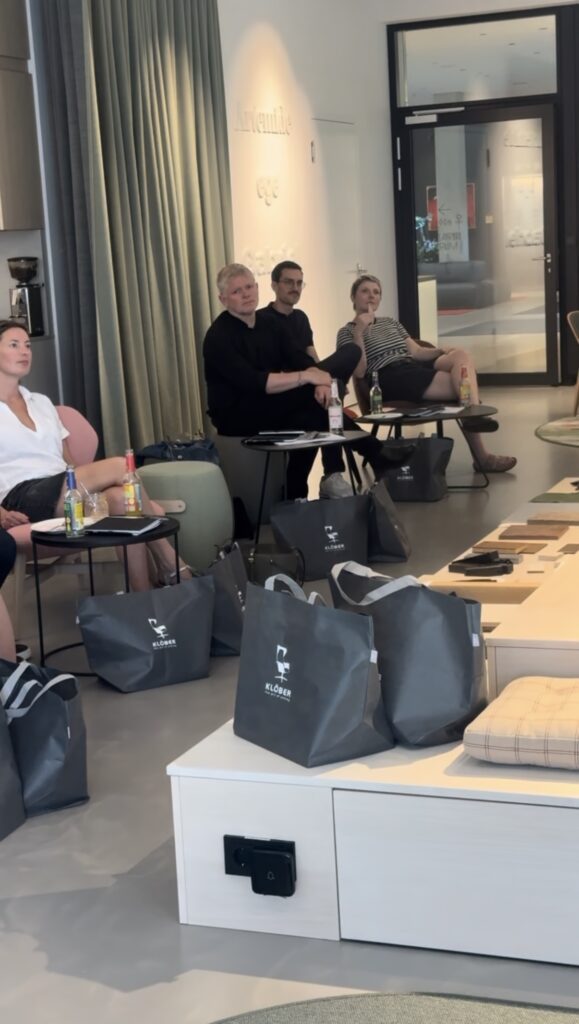
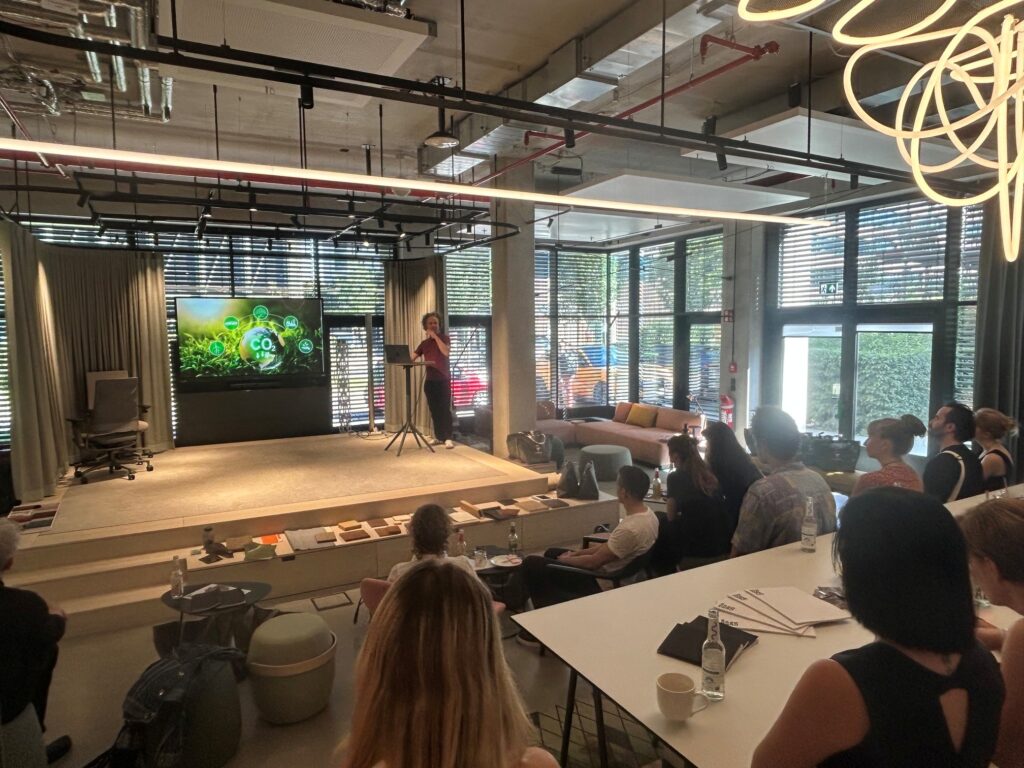
That was exactly the focus of Circular Spec by Klöber & Hauser at IDX81 Munich. As part of our workshop, designers and interior professionals came together to talk about circular interiors: materials, constructions, raw resources, and new ways of thinking about spaces that do not end with dismantling.
Together with Prof. Dr. Sascha Peters from HAUTE INNOVATION, one thing quickly became clear: circular design is not an add-on. It is a new reality for planning. And it starts much earlier than recycling. It begins with the very first decision about a material, a connection, a surface, or a product.
Because a space is never just made of design.
It is made of resources.
Of wood, metal, textiles, foams, minerals, plastics, fibres, coatings. Of energy, transport routes, and production processes. Of decisions that were made at some point — and become relevant again later.
Spaces are not finished images. They are material stories.
In architecture and interior design, we often think about spaces in terms of their effect.
How does a place feel?
How does it sound?
How do people work in it?
How do they move through it?
Circular Spec added a second layer to these questions:
What happens to all of it when the space changes?
When teams grow.
When areas are reimagined.
When furniture moves out.
When materials are dismantled.
Suddenly, a chair becomes more than a chair. A floor becomes more than a surface. An acoustic panel becomes more than spatial atmosphere. Everything becomes part of a cycle — or falls out of it.
And this was exactly the core idea behind Circular Spec: to reflect on these questions and, ideally, to create solutions or new impulses through products and materials.
Future Office Design means: not always starting from scratch
The office industry is changing. Working environments are evolving faster than ever before. Hybrid use, new space concepts, a stronger focus on acoustics, retreat, communication, and encounter.
But when spaces change faster and faster, planning must not automatically mean: everything new.
What can stay?
What can move on?
What can be repaired, reused, recombined, or returned?
During the workshop, this shift in perspective became tangible. It was not about renunciation. And it was not about one perfect solution. It was about a different understanding of value.
A product does not become worthless just because it is no longer needed in one place.
A material is not at the end of its life just because a space is being rethought.
Perhaps this is where the most exciting form of sustainability begins.

Circular is a beautiful word. But what does it really mean?
One of the strongest questions of the workshop was:
Which solutions are truly circular — and which only sound circular?
Because circular economy does not automatically exist just because a material appears sustainable or a product can be recycled. Circularity has to be designed, planned, and proven.
Can a product be dismantled?
Can the materials be separated?
Are there take-back processes?
Is repair possible?
Is documentation available?
Can a material truly return to a cycle?
This is exactly where the workshop became especially helpful for everyday planning. Not as pure inspiration, but as a tool for asking better questions. For specifications. For conversations with clients. A wide range of possibilities was shown that can serve as a foundation for discussions in future projects.
The material lab of the future is already open
What made the workshop particularly exciting was that circular economy no longer felt abstract. It became visible.
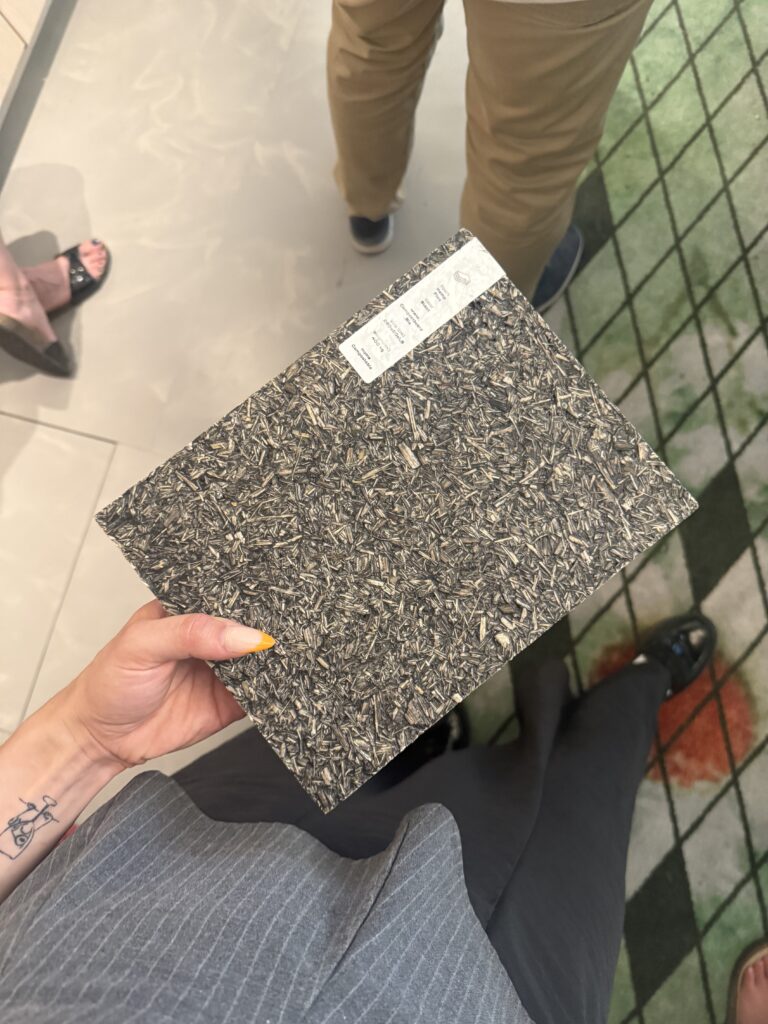
We were able to hold and examine almost all of the building materials and material samples ourselves, creating a much more tangible understanding of them.
Mycelium.
Hemp leather.
Plastic-free paints made from plant extracts.
Wooden modular building systems.
Molecular wood colouring.
Washbasins made from wood cellulose.
Protein-based wood protection.
Monomaterial concepts.
Materials that almost sound as if they come from an archive of the future — and yet are already part of current developments. According to Prof. Dr. Sascha Peters from HAUTE INNOVATION, bio-circular materials not only offer opportunities to reduce CO₂, but also help close product cycles and open up new business fields in the furniture and interior industry.
And perhaps this is exactly the point where it becomes truly exciting for designers:
Sustainability does not have to look like compromise.
It can create a new aesthetic.
New surfaces.
New haptics.
New material honesty.
New stories.
The deposit bottle moment
Sometimes, it takes a very simple image for a complex system to suddenly make sense.
In the workshop, that image was the deposit bottle.
PET is often seen as a symbol of plastic, packaging, and a throwaway society. At the same time, the German deposit system shows just how powerful a material can become when it is not thought of in a linear way. Return. Collect. Clean. Reuse. Put back into circulation.
During the workshop, we heard that a reusable PET bottle can be reused up to 42 times.
And that number stays with you.
Because it shows that sustainability does not depend only on the material itself. It depends on the system behind it.
So the interesting question was not simply:
Is PET sustainable or not?
But rather:
What happens when a material that is usually viewed critically suddenly becomes part of a functioning cycle through return systems, reuse, and clear processes?
And on an even larger scale:
What would happen if PET were simply abolished? Would the alternatives really work better? Or would new materials emerge for which comparable return and reuse systems do not yet exist?
This is where the workshop became particularly interesting: Circular design is not black or white. It is not about labelling a material as good or bad across the board. It is about understanding the entire chain.
Where does a material come from?
How long does it stay in use?
Can it be returned?
Is there an infrastructure for that?
And how often can it be used before it truly leaves the cycle?
Transferred to interior and office design, this becomes a very powerful question:
What if furniture, materials, and components were thought of in a similar way to a deposit system?
Not as linear products that eventually disappear.
But as elements of a return system. As things that reappear. In another space. In another function. In a new phase.
Perhaps the future of sustainable materials does not only lie in what we use.
But in how well we keep it in the cycle.
Circular economy needs more than good products. It needs infrastructure.
This became especially clear after the deposit bottle example: circularity does not arise from a better material alone. Nor from a better product alone.
It needs a system. Because only when it is clear where a material comes from, how long it has been used, where it can be returned to, and what value it still holds, can sustainability become more than a good promise.
New approaches are already emerging in the office industry. With newen, the Industrieverband Büro und Arbeitswelt IBA has announced a digital platform designed to record furniture inventories, return them to the market in an organised way, and document their reuse or recycling transparently.
This shows how much the industry is changing.
The question is no longer only:
Which product is more sustainable?
But rather:
Is there a system that makes sustainability possible in the first place?
And this is exactly why Circular Spec is so relevant for the entire design network. Circular interiors do not begin with dismantling. They begin with specification. With material selection. With the question of whether connections can be released, whether products can be repaired, and whether materials can find their way back into a cycle after use.
And then there is the CO₂ question
Of course, emissions were also part of the discussion. Energy. Production. And the difficulty of keeping an overview in an increasingly complex material world.
Germany is pursuing the goal of reaching net greenhouse gas neutrality by 2045. For the construction, interior, and office industries, this means that every decision becomes more relevant.
Every newly produced product.
Every construction that cannot be taken apart.
Every raw material that has only been thought of once.
Every material that has no way back.
One question from the workshop particularly stayed with us:
How climate-neutral can something be if it has to be produced from scratch every single time?
Perhaps this is the essence of Future Office Design:
not only planning more beautifully, but thinking further and smarter.
We could probably have continued discussing this topic for hours, because it quickly became clear how relevant circular economy is for all participants from the different industries.
What remains?
After this afternoon, what remains most of all is a different perspective.
On spaces.
On materials.
On furniture.
On raw resources.
On what comes after use.
Circular Spec showed that circular interiors are not a topic for the distant future. They begin now — in planning, material selection, and design.
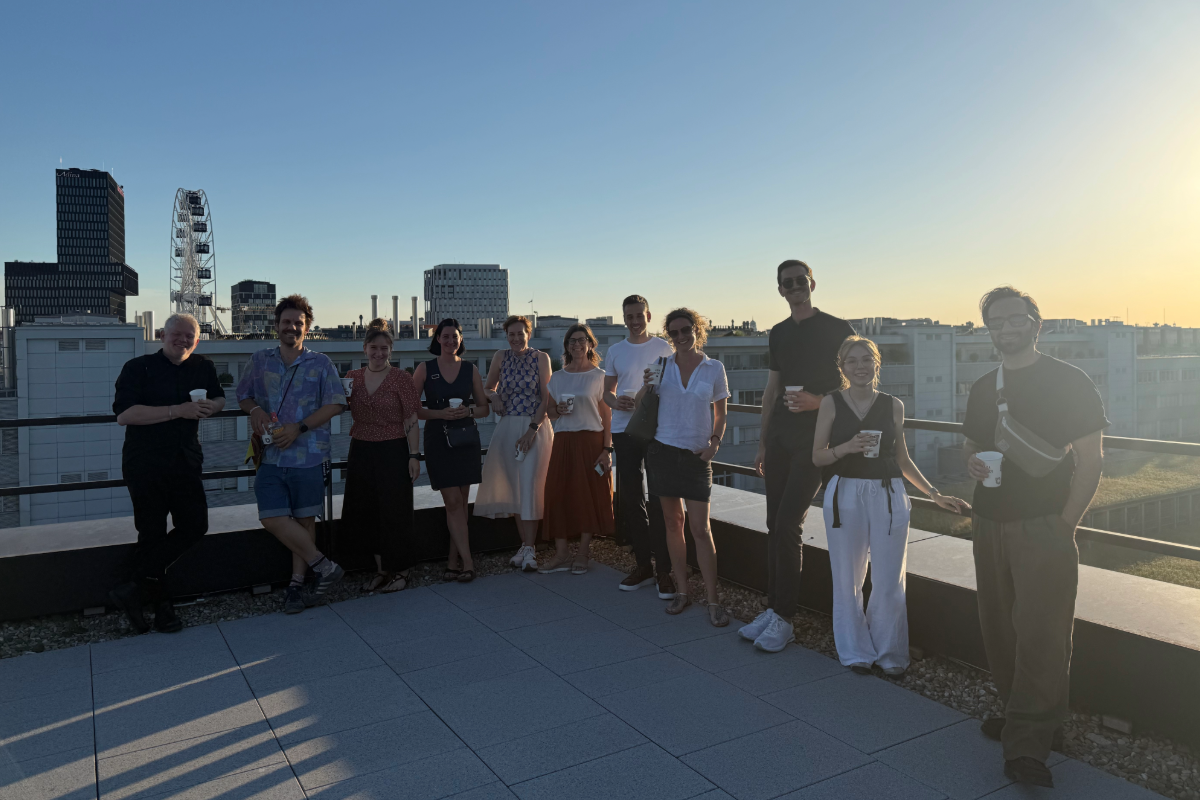
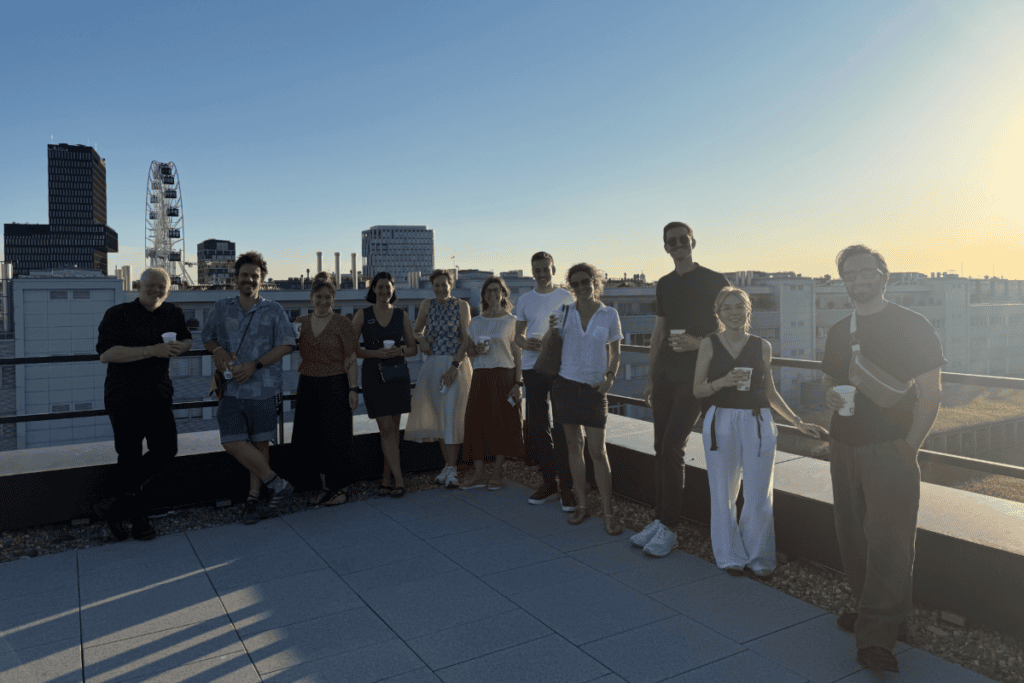
To close the evening, we gathered on the rooftop terrace of IDX81 Munich. Thank you to Artemide, Ege, and Gabriel for making this beautiful setting possible.
Thank you
Thank you to Prof. Dr. Sascha Peters from HAUTE INNOVATION for the inspiring input, the material depth, and the clear perspective on a functioning circular economy.
Thank you to Klöber for the workshop format Circular Spec and the in-depth exchange on circular materials, constructions, and product strategies.
And thank you to all guests from our Design Office Network for the open questions, the exchange, and the shared motivation to think about office design not only in a more beautiful way, but also in a more intelligent, long-lasting, and responsible way.
We are very happy that our network events continue to create space for exchange in the world of office design — and that they keep bringing valuable new impulses to everyone involved.
And we are already looking forward to everything that is still to come.
More Input from the Event you will find here: On our Instagram.
Best regards,
Giulia