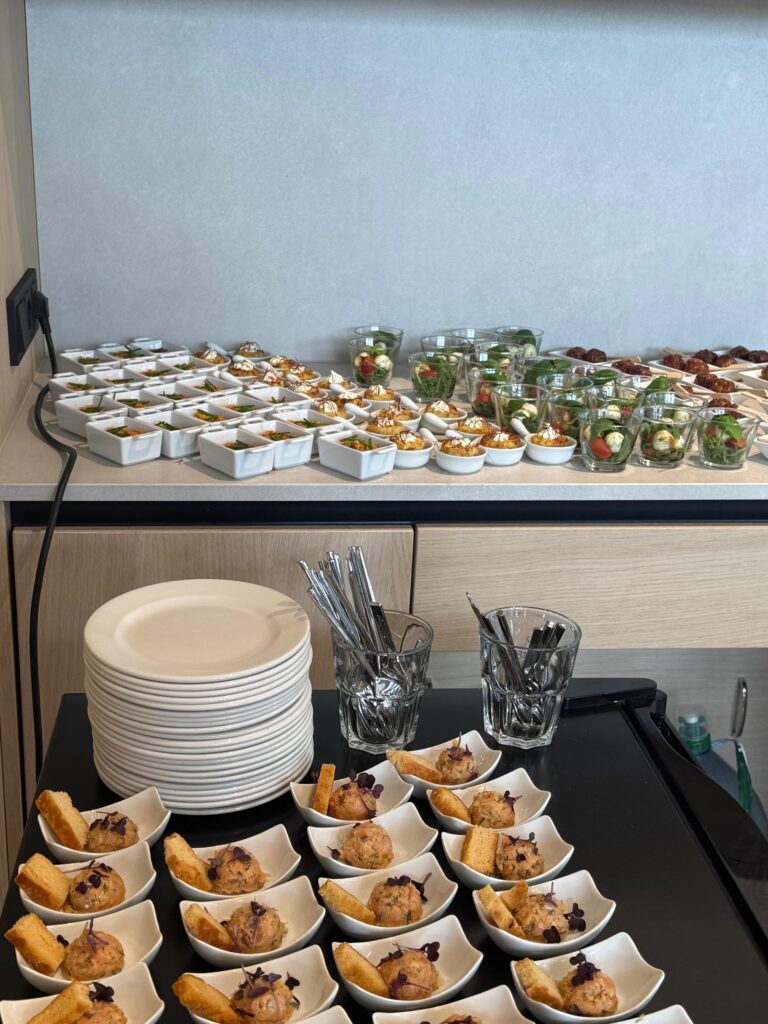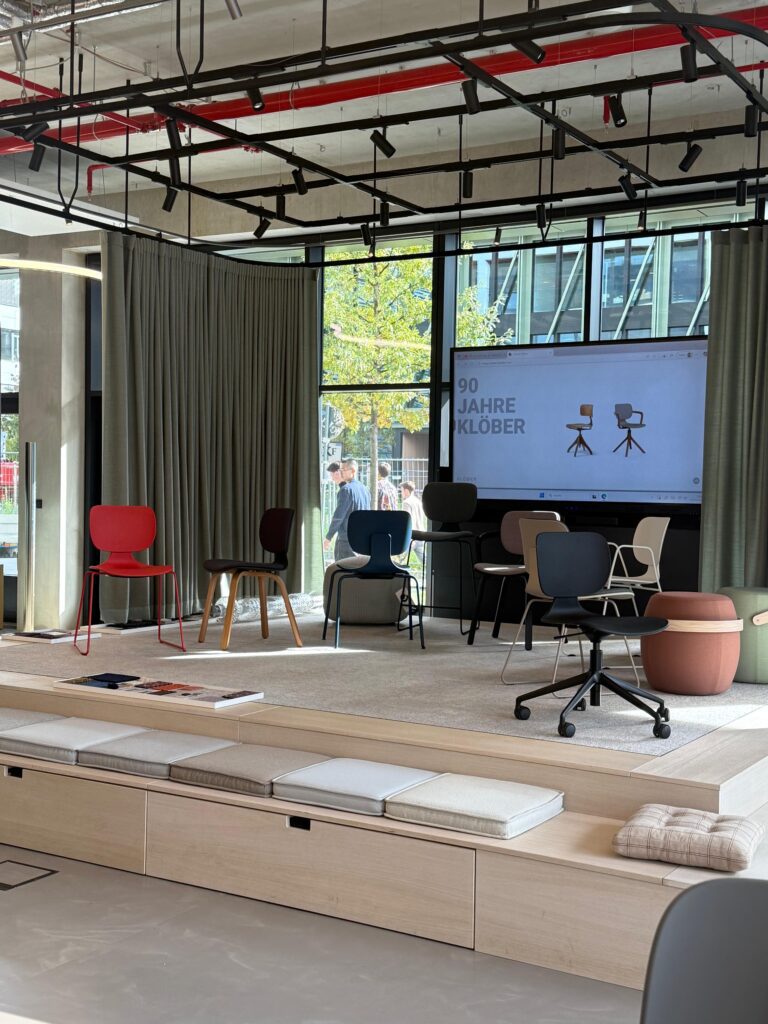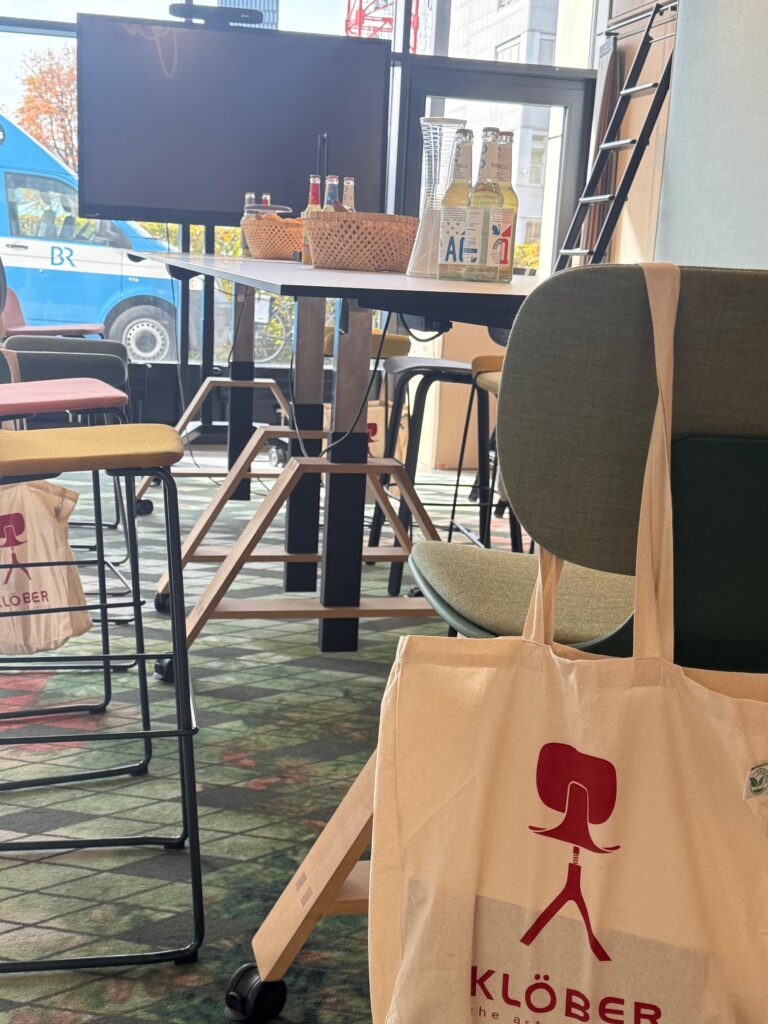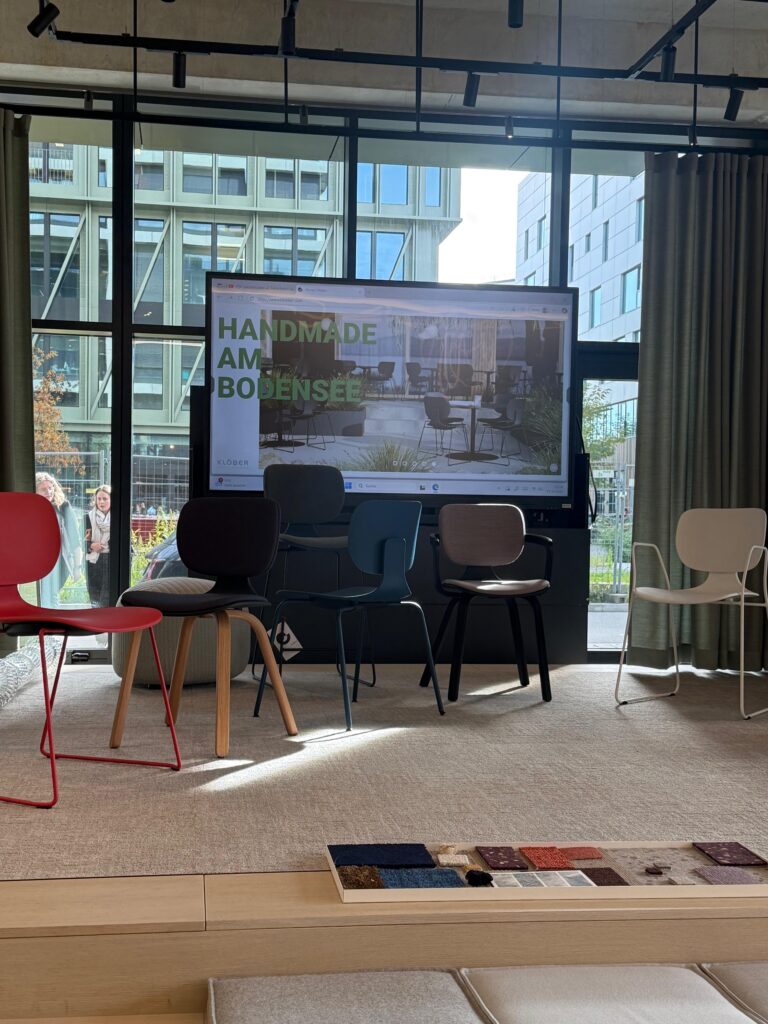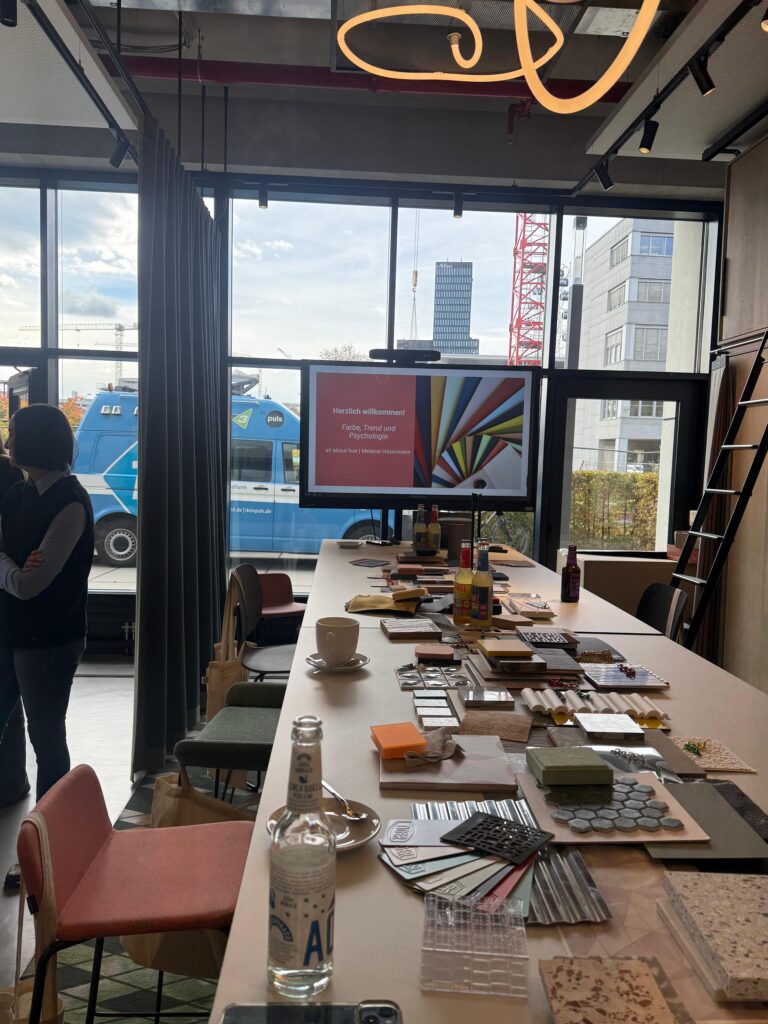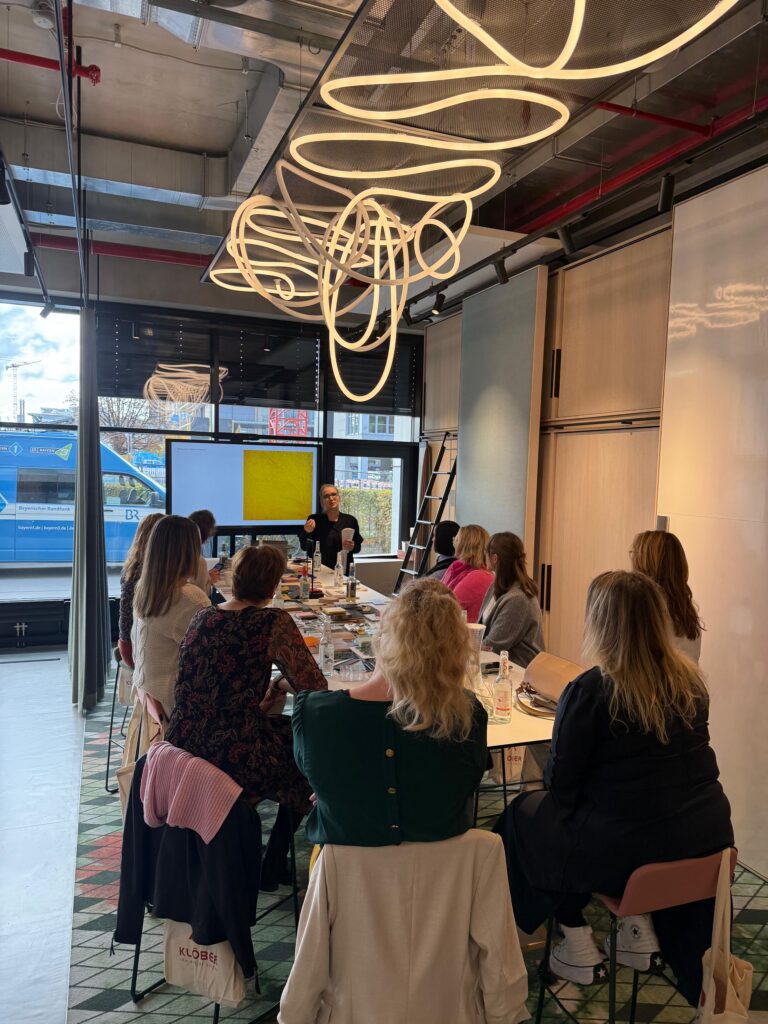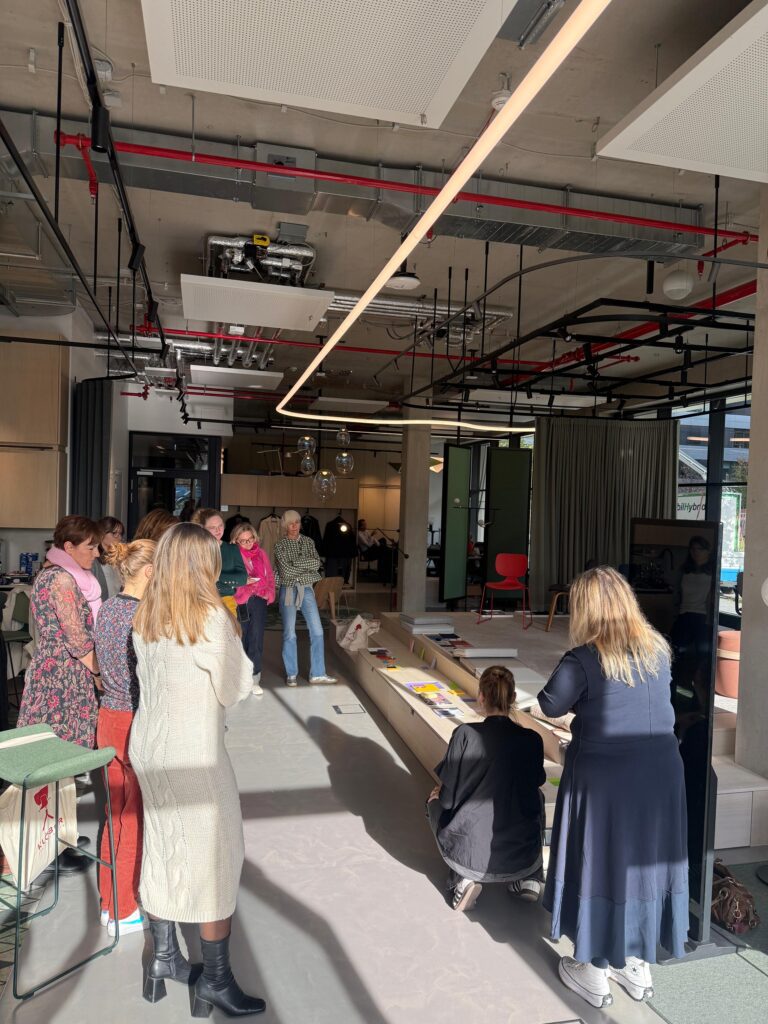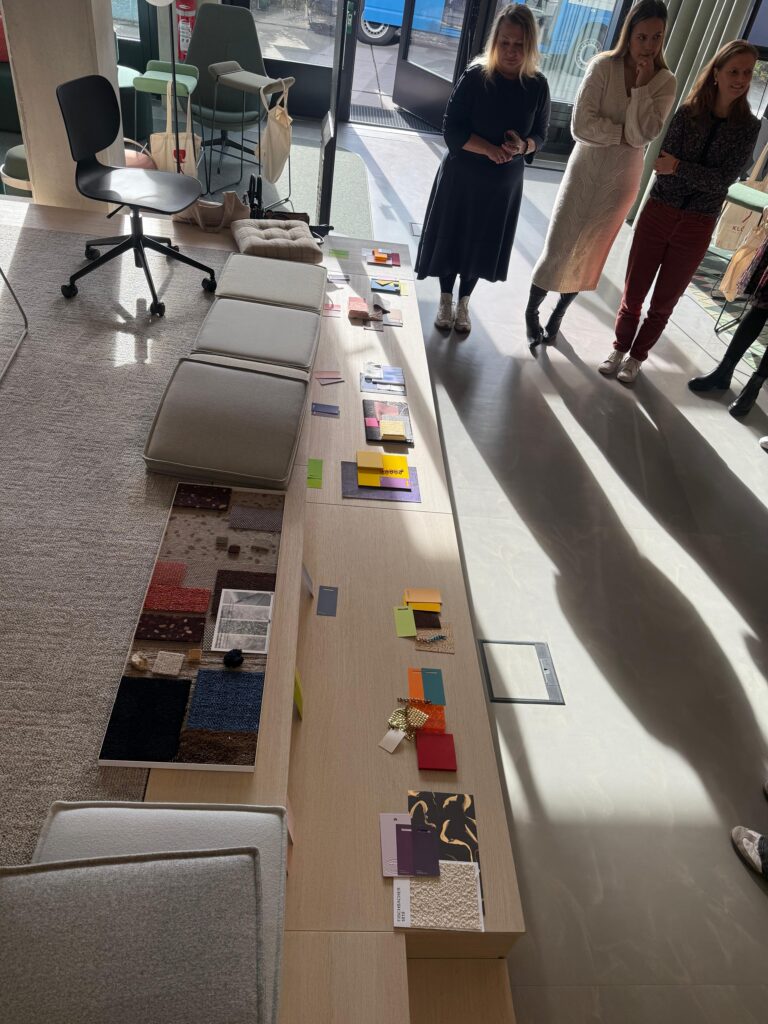
That was exactly the question behind our workshop “Designing Spaces with Colour – Trends, Colour Psychology and the Impact of Colour”, which Klöber hosted together with us in the inspiring surroundings of Artemide at IDX Munich.
Together with architects and designers, the day was filled with insights, conversations and new perspectives on the role of colour in office design.
Understanding colour – rather than just feeling it
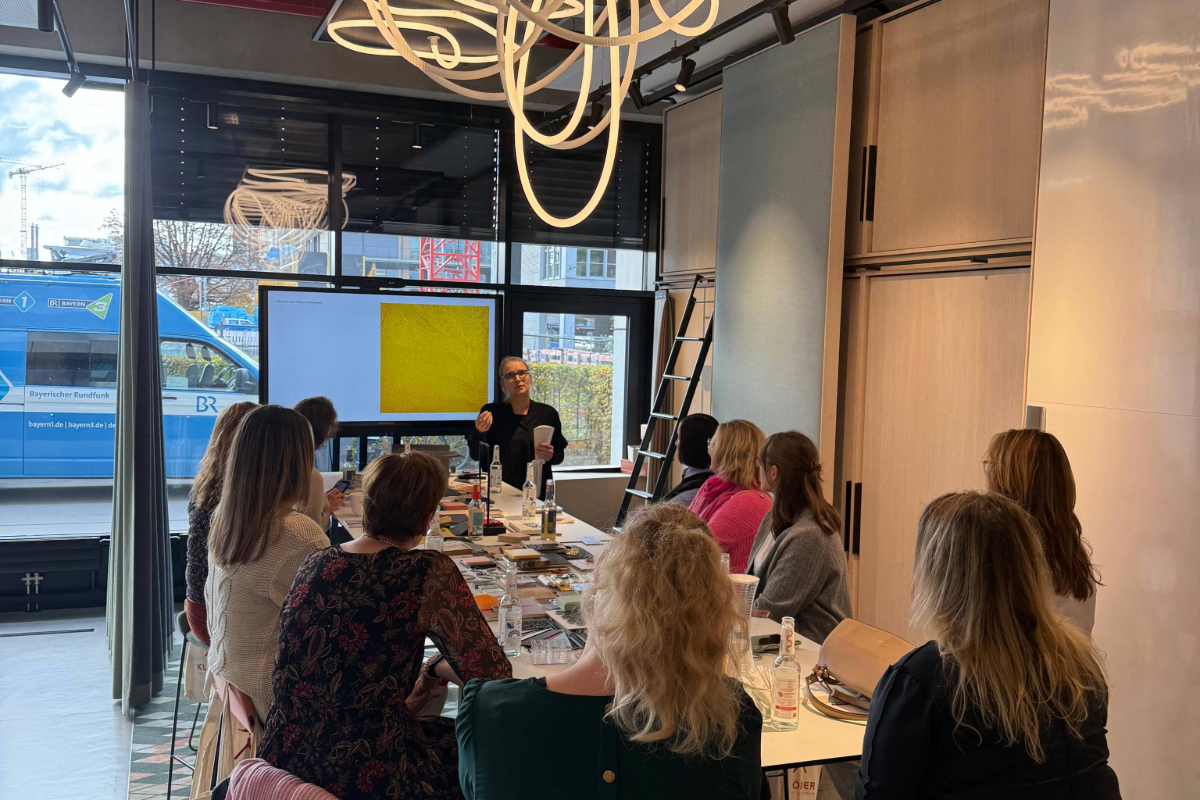
The day began with Melanie, a colour expert with an impressive sense for system and effect, who introduced us to the foundations of colour theory.
She showed how colour can be understood and described analytically – through parameters such as Hue, Saturation and Brightness – completely without emotion.
At the same time, she demonstrated how to bring emotion back in, exactly where it creates atmosphere and brings spaces to life.
A fascinating change of perspective that made one thing clear: colour is not only emotion – it is also a precise language.
Colour in the office – identity, atmosphere, and impact
Especially in modern office concepts, colour plays a crucial role.
It structures spaces, defines zones, and encourages either focus or communication.
Through the exchange with architects, it became clear how colour design and workspace planning go hand in hand – and how colour can make company culture visible and tangible.
Another key topic was the relationship between corporate identity and colour concept: how can brand identity be translated into spatial design without being overwhelming?
Experiencing colour – collaboration and creativity
After theory came practice.
In small groups, we created moodboards around different scenarios and emotional states – from “loud” to “calm”, from a children’s doctor’s office to coworking cafés.
It quickly became clear how differently colour is perceived and how much personal associations influence our perception.
This creative exchange was incredibly inspiring – colour truly became a shared language.
Klöber – where colour meets design psychology
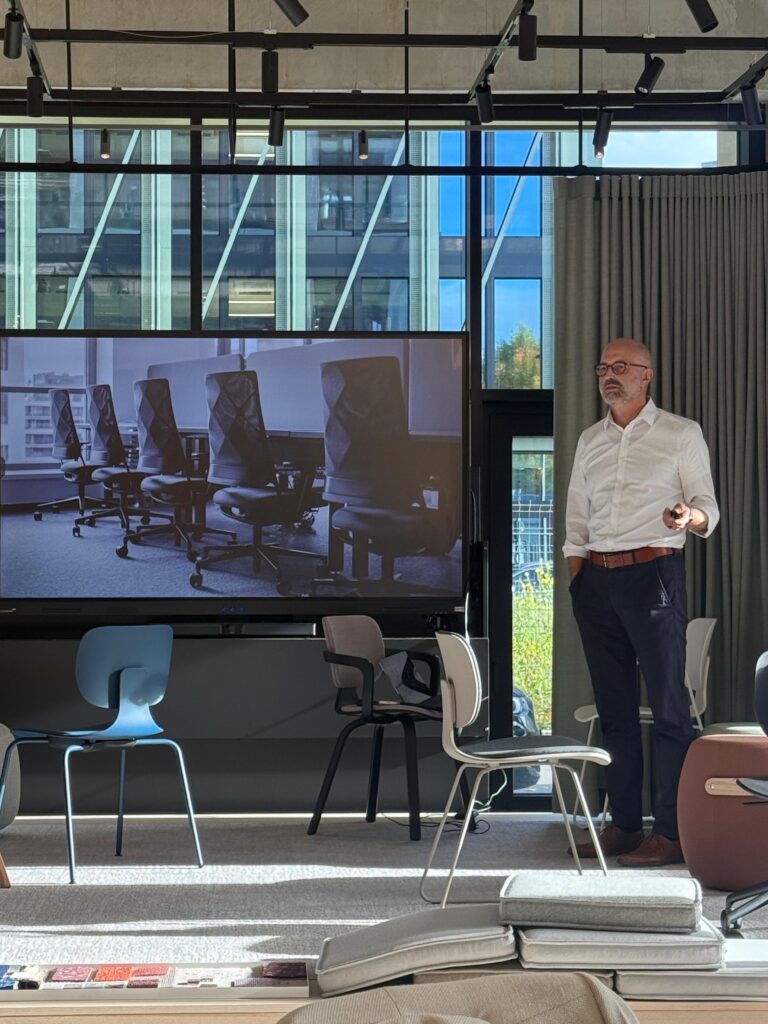
Another exciting perspective came from Thomas Müller of Klöber, the company based on the shores of Lake Bodensee, known for its ergonomic seating design Made in Germany.
He showed how closely design, ergonomics, and colour are connected at Klöber – and how every product is designed to integrate seamlessly into different workspace concepts.
Here, colour plays a central role: it shapes not only the visual appearance of a chair, but also its emotional impact within the room.
Whether calming, activating or focusing – colour at Klöber is part of the design philosophy and contributes to the product’s identity.
This insight built a fascinating bridge between product design and spatial design, demonstrating how strongly colour influences every level of design.
Conclusion: Colour is language
Colour shapes, connects and moves.
This workshop showed that it is far more than just a design element – it is communication, identity, and emotion all at once.
A big thank you to Klöber for an inspiring day full of ideas, discussions, and colour –
and to all participants who shared their thoughts and perspectives on the role of colour in office design.
And of course, to Artemide, for letting us use their beautiful showroom at IDX Munich. 🎨
👉 You can find all impressions and highlights in our reel on Instagram.
Kind regards,
Giulia